
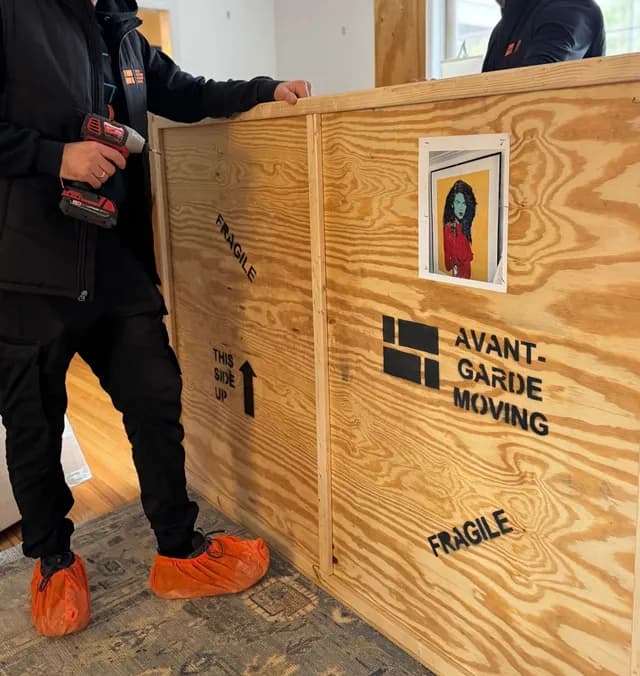

A wine collection is the most fragile category most movers ever handle, and the most consequential. A bottle of cult Burgundy or first-growth Bordeaux is not just expensive. It is the result of years of conditions (temperature, humidity, light, vibration) that a single bad move can undo. The wine still pours. It just does not taste like the bottle that was promised.
This guide walks through what actually goes into moving a wine collection in NYC: temperature management, inventory, building constraints, the surprisingly complex legal picture on interstate shipment, and the insurance considerations that protect a serious cellar in transit.
Why Wine Is Different
A standard mover treats wine the way they treat any glass-bottled liquid: pack it in cell boxes, keep it upright, do not stack it under heavy items. That approach will get most of the bottles to the destination unbroken. It will not protect the wine.
Wine is a living storage product. The integrity of a bottle depends on three variables that have nothing to do with whether the glass breaks:
-
Temperature stability. A bottle that goes from a 55°F cellar in Tribeca into a 90°F truck on a July afternoon and back into a 55°F cellar in Brooklyn has been damaged. The wine may not show it for months, but heat exposure is cumulative and accelerates aging in ways that compress the drinking window.
-
Vibration. Sediment in older wines is part of the structure. Hard vibration disturbs it, and once disturbed, it takes weeks to settle. A bottle moved roughly and opened too soon will taste muddy and closed.
-
Light and humidity. Less acute during a same-day move, but relevant for any collection that will sit in temporary storage between residences.
A serious wine move plans around all three. A general mover does not. The cost difference is meaningful. The risk difference is much larger.
Inventory First, Always
Every wine move starts with an inventory. Not a casual count. A real one, with each bottle accounted for by producer, vintage, format, and condition.
For a small collection of fifty to a hundred bottles, a spreadsheet is enough. For a serious collection of a thousand bottles or more, dedicated cellar management software (CellarTracker, Vinfolio, Wine-Searcher Pro) makes the inventory portable and shareable with the mover.
The inventory drives:
- The number and type of shipping cases required
- The truck size and climate specifications
- Insurance valuations
- Customs declarations if any bottles are being shipped internationally
- The reassembly map at the destination cellar
It also serves as the baseline for any claim. A bottle that arrives broken or that goes missing is only recoverable if the move documentation says it left.
Take photographs of the cellar layout before any bottle is touched. A few minutes of photographs save hours of debate later.
Temperature: The Single Most Important Variable
A standard moving truck in NYC is not climate-controlled. In summer, interior temperatures regularly exceed 100°F. In winter, an overnight hold in an unheated truck can drop below freezing. Either extreme is damaging.
For any meaningful collection, the move should use:
- A climate-controlled truck, maintained between 55 and 65°F for the duration of transit
- Insulated wine shipping cases (typically polystyrene molded inserts) as a secondary layer of protection
- No stops longer than necessary, particularly in summer
For a same-day NYC move, the temperature exposure is short and manageable with the right truck. For a multi-day interstate move, the planning is more involved and may include overnight holds in temperature-controlled facilities.
For longer holds between residences, climate-controlled wine storage is the only correct answer. Our storage service handles climate-controlled holding for situations like this: a renovation, a temporary lease gap, or a collector who has sold one home before the new one is ready.
Vibration and Loading
The packing decisions for wine focus on isolating bottles from vibration as much as from impact.
Best-practice materials and methods:
- Molded polystyrene shipping cases (12-bottle is standard, 6-bottle for larger formats) that hold each bottle in its own cell with no bottle-to-bottle contact
- Original wood cases where they exist, with the bottles repacked into the original straw or foam and the lid secured
- Reinforced exterior cartons when shipping in foam-only cases, with double-wall corrugated for any interstate transit
- Bottles laid on their sides (the conventional cellar position) so the cork stays in contact with the wine; only ship upright for very short transits if the case design requires it
Inside the truck, wine cases are loaded against the cab wall, low and forward, with no other cargo stacked on top. They are strapped to E-track and padded against the wall. Drivers handling wine loads, like drivers handling fine art, drive slower, brake earlier, and avoid stretches of road with known surface issues.
The post-move recommendation matters too. After any transit, wine should rest for at least two weeks before being opened. Older bottles with sediment should rest longer, sometimes a month or more. Open a Burgundy a week after the move and the wine may show muted, with the sediment still in suspension.
NYC Building Access
The building-access picture for a wine move is similar to a furniture move with a few wrinkles unique to bottles.
Practical considerations:
- Cellar access. Many NYC wine cellars are in basements with narrow staircases. The cases that fit easily into the cellar may need to come back out one at a time, by hand, before they can go into the elevator.
- Freight elevator weight limits. Wine is heavy. A 12-bottle case weighs roughly 40 pounds. A thousand-bottle collection is more than 3,000 pounds. Freight elevators have load limits that matter when the mover is trying to consolidate trips.
- Co-op move rules. The same Certificates of Insurance, time windows, and elevator padding requirements that govern any NYC co-op move apply. Wine moves are not exempt.
- Doorman protocols. Some buildings prohibit alcohol on the loading dock for liability reasons. Confirm this with the building manager before the move date.
We cover the broader building-access landscape in our Brooklyn-to-Manhattan move guide, and the same logic applies for wine: assume nothing about access, measure the elevator and stairwell, and confirm building rules in writing before the move date.
The Legal Picture: Interstate Wine Shipment
This is the section that surprises most collectors moving out of New York.
A common assumption is that personal property can move freely across state lines. For most categories, that is true. For alcohol, it is not.
The Twenty-First Amendment gives states broad authority over alcohol within their borders. Some states allow personal collection imports under specific conditions. Others restrict or prohibit them. The rules vary not just by state but sometimes by destination county or city. A collection moving from New York to California, to Texas, to Florida, or to Massachusetts each operates under different rules.
The practical implications:
- A residential mover is generally not licensed to transport alcohol across state lines. A move-and-store provider with the proper licensing is a different category.
- Some collectors use a separate licensed wine logistics company for the cellar while a standard residential mover handles the rest of the household. This is common for serious collections.
- Documentation matters. Even where personal collection imports are allowed, the destination state may require an inventory, proof of personal ownership, and sometimes a permit.
- Wine clubs and unreleased futures may have separate restrictions that follow the wine, not the owner.
For an interstate wine move, the first call is to a wine logistics specialist licensed in both the origin and destination states. The second call is to the mover handling the rest of the household, who can coordinate timing but not transport the alcohol itself.
For intra-NYC moves and intra-state moves within New York, none of this applies. The collection can be handled directly by the residential mover with the proper climate-controlled equipment.
Building the Move Plan
A wine move plan should include, at minimum:
- A complete inventory with valuations
- A list of any bottles requiring special handling (large formats, rare or particularly fragile examples, anything currently showing condition issues)
- The packing materials and number of cases required
- The truck specifications, with climate control confirmed in writing
- The route and timing, particularly any overnight holds
- The building access plan at both ends
- The post-move resting plan in the new cellar
For larger collections, this plan is a written document signed by both the collector and the mover before the move date. For smaller collections, a thorough email exchange is often enough. Either way, the plan is the contract.
The Destination Cellar
Setting up the new cellar takes more than putting cases on shelves. The bottles need to be:
- Returned to their cellar positions (lying on their sides, with the label facing up so any later condition assessment is easier)
- Organized to match the original layout or a new layout chosen in advance, so the inventory stays usable
- Allowed to acclimate before any are opened (minimum two weeks for most wines, longer for sediment-bearing older bottles)
Cellar conditions in the new location should be confirmed before the bottles arrive. Target conditions:
- Temperature: 55 to 58°F, stable, with minimal daily fluctuation
- Humidity: 60 to 70 percent
- Light: low or none, with no direct UV exposure
- Vibration: minimal, away from HVAC equipment, washers, or major appliances
If the new cellar is still under construction or the conditions are not yet stable, the collection should go into temporary climate-controlled storage rather than into an unfinished space. The cost of a few weeks of storage is small relative to the cost of a thousand bottles aging incorrectly.
Insurance: A Different Animal
Standard moving company valuation coverage is largely useless for serious wine collections. Federal released-value coverage pays 60 cents per pound for damaged goods. A 40-pound case of $1,000 bottles, totaling $12,000 in wine, would pay out $24 under released-value. This is the legal default if no other coverage is specified.
Full-value protection from a mover is an improvement but still has limits, typically with per-item caps that fall well below the value of cult or rare bottles. And valuation coverage typically excludes consequential damage. Bottles that arrive intact but have been heat-damaged in transit are often not covered at all, because the glass is unbroken.
For meaningful collections, the right setup is:
- A homeowner's or renter's policy with a fine wine rider, confirmed to cover transit and any temporary storage. Most standard policies do not.
- Standalone wine cellar insurance for larger collections, written by specialists who understand condition issues, market values, and the difference between physical damage and stewardship damage.
- Declared value with the mover, in writing, before the move, with specific reference to high-value bottles.
Our moving insurance in NYC guide covers the broader picture, and the principles apply directly to wine.
A practical step: photograph every case, every label, and the cellar layout in good light in the weeks before the move. If a claim is ever needed, this documentation is the foundation.
Realistic Budget
Wine moves cost more than equivalent-weight standard moves. The reasons are real: climate-controlled trucks, specialty cases, careful loading, slower transit, and often additional handlers. For a small collection of one to two hundred bottles within NYC, the premium over a standard residential move is modest. For a serious cellar of a thousand bottles or more, the cost reflects the complexity and the equipment.
The math that matters is not the move price. It is the move price plus the protection it buys for an asset that is often worth six or seven figures and that cannot be replaced if it is damaged in ways that do not show until the cork comes out.
Choosing the Right Mover
Questions worth asking any company quoting a wine collection move:
- Is the truck climate-controlled and maintained between 55 and 65°F for the duration of transit
- What cases or packing materials will be used
- How is the load secured against vibration
- What is your valuation coverage and per-item liability limit
- Have you handled wine collections of this scale before
- For interstate moves, what is your licensing for alcohol transport, or do you partner with a licensed wine logistics specialist
- Can you provide references from collectors
The answers reveal whether the company has built a wine handling capability or whether wine is simply another residential category with extra care. The first is what a serious cellar deserves. The second is what most collections receive by default.
Our white-glove moving service is designed for exactly these categories: collections where the value of the cargo and the consequences of mishandling justify a different standard of care from the first walkthrough to the last case placed in the new cellar.
A wine collection moved correctly arrives at the destination tasting exactly the way it tasted in the original cellar. That outcome is not luck. It is the result of decisions made before the first case is touched, by a team that treats wine as the living storage product it is.