
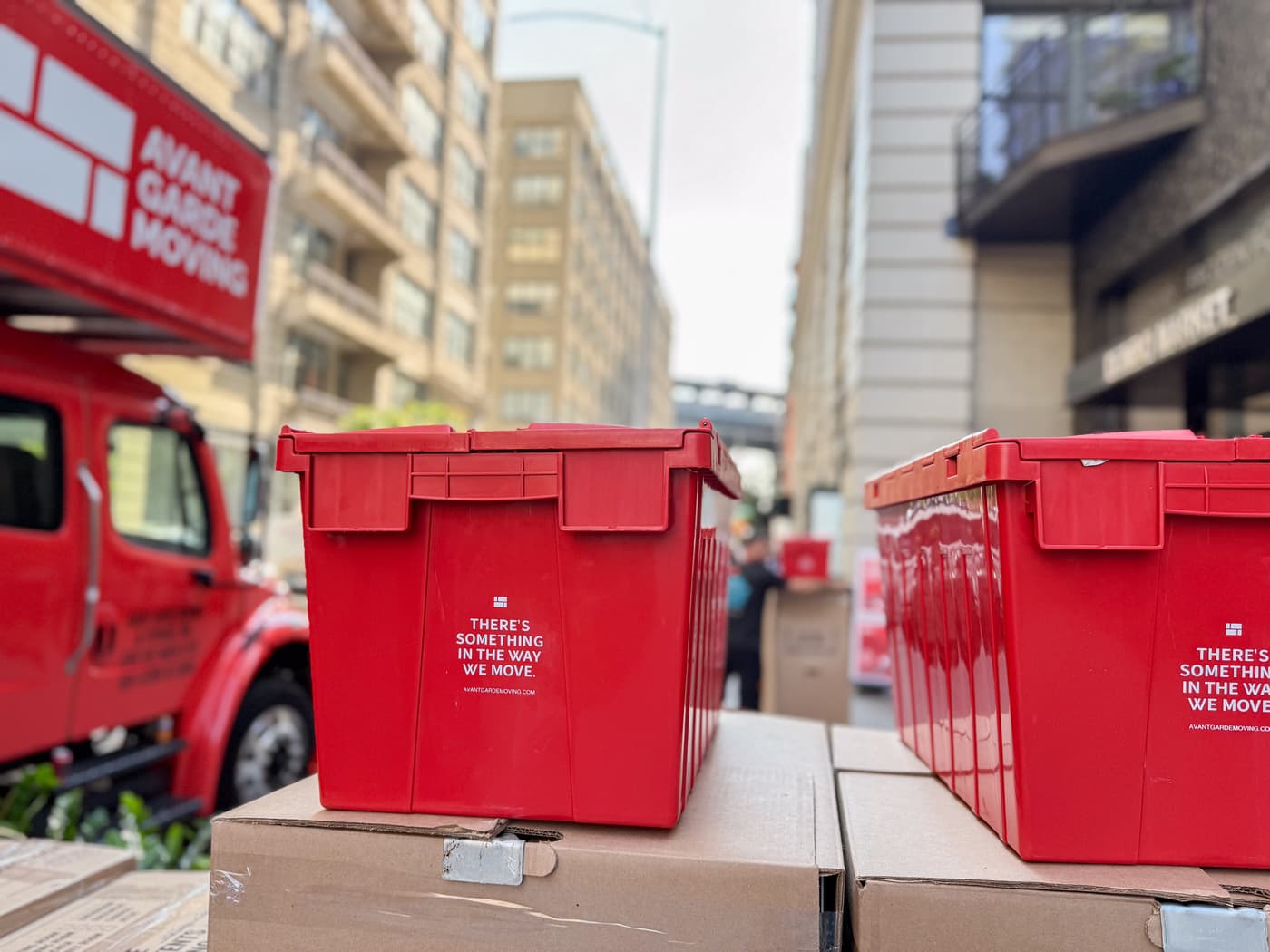

Spring in NYC looks gentle from the outside. From inside the moving industry, it's a slow-motion stampede that starts in mid-May and doesn't stop until Labor Day. April feels manageable - then mid-May arrives, lease cycles compress, Columbia, NYU, and Fordham all release students into the market the same week, and every weekend Saturday in June disappears. The callers who think "it's only a few weeks, I'll figure it out in May" are the ones who end up scrambling for a Tuesday move-in or paying premium for an off-hours freight elevator slot. Here's what an April-to-June move in NYC actually involves, and how to avoid getting squeezed out of the dates you need.
Why Spring Is the Sneaky Hard Season
Most people think summer is moving season. They're half right. The crunch actually starts about six weeks earlier than they expect, and by the time the calendar flips to June, the schedule is already locked in. About 70% of the dates we book in June are reserved before Memorial Day weekend.
Here's the rough rhythm of an April-to-June stretch as we see it from dispatch:
- April: Calm. Crews finish on time. Building reservations available with a week's notice. Weather is the wild card.
- Early to mid-May: The phones start ringing. Lease signings cluster. Weekend dates begin filling.
- Late May through June: Frenzy. Lease rollovers, college move-outs, weddings, graduations, and the start of summer relocations all collide.
If you're moving anywhere between May 15 and July 4, treat your booking like an airline ticket, the longer you wait, the worse your options get, and weekends sell out first.
The unofficial start of busy season is the Monday after Mother's Day. Don't ask me why. We've watched it happen for years. The week before is normal. The week after, the weekend slots evaporate.
What April Actually Feels Like
April is the most underrated moving month in NYC. It's also the muddiest. The ground has thawed, the sidewalks are wet half the week, and every brownstone stoop is a mud-trail factory waiting to happen.
The challenge in April isn't volume, it's weather variance. You can have a 65-degree blue-sky Saturday followed by a Tuesday where it rains for nine hours straight. The National Weather Service NYC office is your friend here; check the seven-day forecast the moment you have a tentative date.
What April moves typically look like operationally:
- Cold morning loadouts (45 degrees at 8 a.m.) into warm afternoons (70 by 3 p.m.)
- Wet sidewalks even on dry days because of overnight dew and street washing
- Mud tracked from outdoor shoes onto carpet within the first three trips
- Freight elevators that aren't yet booked solid
If you can pull the trigger in April rather than waiting for May, do it. You get the same crews, attentive service, and your pick of local moving dates. The trade-off is rain. Manageable trade-off.
The Mid-May Inflection Point
Around May 12-18, our schedule flips. Up until that point, weekends have openings. After that point, weekends are gone, and we start nudging callers toward Mondays and Wednesdays.
A few things converge:
Lease signings. New York rental cycles cluster around June 1, July 1, and August 1 start dates. Anyone signing a lease in late April or early May is locking in a move date six weeks out. That's mid-May to mid-June for the bulk of them.
The graduation calendar. Columbia commencement week, NYU graduation, Fordham, The New School, Pratt. Every campus dumps thousands of students into the moving market in a tight window between mid-May and early June. Many of these students have parents flying in to help, and parents want weekends.
Building reservations close fast. A pre-war co-op in the Upper West Side might allow only one move per day on the freight elevator. A 200-unit Brooklyn rental might allow two, with three-hour windows. By May 15, those slots are gone for the rest of the month.
Book six to eight weeks ahead for a May or June move. Two weeks out is "we'll figure something out." One week out is "I hope you can do a Tuesday."
If you're flexible on date, you can still get good service in late May. If you need a specific Saturday, you needed to call us in March.
The June Frenzy: Graduation Crunch and Lease Rollovers
June is its own beast. Three things hit at once:
College move-outs. Dorms have hard checkout dates. Off-campus students near NYU, Columbia, Fordham Lincoln Center, and Pratt all have lease ends bunched together. We've watched four moves on a single block of West 113th Street in one afternoon. The freight elevator at a typical Columbia-area building gets booked months in advance for that last week of May into early June.
June 1 and July 1 lease starts. This is the heaviest two-day stretch of the year for residential moves in NYC. June 1 in particular hits hard because of the academic calendar overlap. We're typically running three to four crews simultaneously on June 1 and turning down inquiries by mid-April for that exact date.
First heat waves. Spring in NYC ends abruptly. By mid-June you can get a 92-degree day. Old buildings without proper ventilation turn freight elevators into ovens. Crews slow down, rest more, and drink more water, all of which is correct and necessary, but it stretches the timeline.
If you're moving in June, our usual advice for surviving it:
- Confirm your building's COI requirements the day you sign the lease
- Reserve the freight elevator before you reserve the movers, not after
- Pad your schedule by an hour on either end
- Have water and Gatorade on site for crew and yourself
Read our deeper take on weekend versus weekday moves, June is the month where switching from Saturday to Wednesday saves you a lot more than money.
Floor Protection Is Not Optional in Spring
In winter, salt is the enemy. In spring, it's mud. And spring mud is sneakier because it doesn't look dirty until you see it on a cream-colored carpet.
The classic spring scenario: brownstone stoop, recent rain, six trips in and out for a one-bedroom load. By trip three, there's a brown trail down the hallway of the new apartment. By the end of the day, the trail has dried into a pattern that won't come out without a professional carpet cleaning.
What we do on every spring move:
- Adhesive floor runners on hardwood and tile from front door to staging area
- Heavy-duty mats at every entry, swapped out when they soak through
- Boot covers for crew during heavy rain (not always perfect, but they help)
- A staging zone just inside the door where boxes get a quick wipe before continuing inward
This level of protection isn't standard with every mover. Ask before you book. If a crew is going to walk straight from a wet brownstone stoop into your living room without floor protection, you're going to regret it within 24 hours of moving in.
Allergy Season, Yes, This Matters
Pollen counts spike from late April through early June. If you or anyone on the crew has bad seasonal allergies, this becomes a real factor. Open windows in trucks, dust kicked up from disassembly, pollen collecting on upholstery during outdoor staging, it adds up.
What we suggest:
- Keep windows closed during loading and unloading if pollen counts are high
- Cover upholstered furniture for any outdoor staging time, not just transport
- Wipe down hard surfaces with a damp microfiber when items reach the new place
- If you're sensitive, take your antihistamine the night before, not the morning of
The EPA indoor air quality guide has good baseline information about ventilation and air quality during high-allergen seasons. Worth a skim if you're moving with young kids or anyone with asthma.
The Window AC Unit Problem
Here's a spring-specific NYC headache that catches first-time renters every single year. Many older buildings require window air conditioners to be removed during winter. Tenants pull them in October or November. By April, people start thinking about putting them back in. Some buildings actually require reinstallation by a specific date.
The collision: you're moving out April 25. You haven't reinstalled the AC. The new tenant moves in May 1. Now there's a question of whether you take the unit, leave it, or coordinate handover. Or, worse, you're the new tenant, the previous person took the unit, and you're showing up to a hot apartment with no cooling.
A few rules of thumb we've seen work:
- Decide AC fate before move day, not during
- If the unit is staying, leave it installed, moving them is brutal and they're heavy
- If the unit is leaving, pull it the day before so the window is sealed against rain
- Confirm with both buildings whether AC reinstallation requires super assistance or a specific bracket
If you're scaling down on appliances and undecided about whether to ship a unit at all, Energy Star is a useful reference for what's worth keeping versus replacing. A 12-year-old AC unit you're paying us to move and store isn't always worth the hassle.
Truck Parking and Spring Construction
Spring is also the start of NYC construction season. New scaffolding goes up. Sidewalk sheds proliferate. Block-long no-parking signs appear on Tuesday for a Thursday job, and our trucks need somewhere to go.
What this looks like in practice: we show up at a Park Slope brownstone on a Saturday in May, and the entire block is cordoned off for facade work that wasn't there when you signed your lease. We circle. We wait. We sometimes have to stage the truck a block away and walk the load farther.
A few things that help:
- Walk your block the morning before move day; photograph any new no-parking signs
- File a temporary no-parking request via 311 if your block is high-traffic, we can talk you through this
- Confirm loading zone availability with both buildings 48 hours ahead
- For complex blocks, our dispatcher will sometimes scout via Google Street View the night before
The NYC.gov building permits portal lets you check if any active construction permits will affect your block on move day. Worth two minutes.
Outdoor Staging Is Finally Easy
After winter, this part feels luxurious. No snow piles to navigate. No salt on the sidewalk. No frozen ramps. Crews can stage furniture on the sidewalk for short windows, sort blanket-wrapped pieces in daylight, and load the truck without fighting the elements.
This is one of the genuine pleasures of spring moves. Loading a 2-bedroom in March with snow still on the ground is twice as hard as loading the same apartment in late April. Crews move faster, they're less fatigued, and your move ends earlier.
It's also the easiest season for decluttering before the move. Stoop sales work in spring weather. Donation pickups are easier to coordinate. Junk haulers respond faster. If you've been planning to ditch furniture before the move, April is a perfect window, and your move gets cheaper-and-faster the lighter your load is.
What to Wear If You're DIY-ing Part of It
Almost every client we work with handles at least some of their own packing or staging. In spring, dressing for it is genuinely tricky. Mornings can be 48 degrees. Afternoons can hit 75. The truck is hot. The hallway is cold. The sidewalk is windy.
Our suggested layering:
- A long-sleeve base layer that breathes
- A mid-layer fleece or zip hoodie you can shed by 11 a.m.
- Closed-toe shoes with grip, wet stoops are slick
- A waterproof shell stashed in the front seat in case it rains
- Work gloves; spring boxes get wet edges that tear up bare hands
Don't wear shorts. The first time a moving blanket catches the side of your knee on a stair railing, you'll understand why.
Pre-Move Booking Reality for Spring
Here's a rough breakdown of how far ahead to book based on when you're moving:
- April 1-15: Two to three weeks ahead is fine
- April 16-30: Three to four weeks
- May 1-15: Four to six weeks
- May 16-31: Six to eight weeks for weekends, four for weekdays
- June 1-15: Eight weeks minimum, especially for the 1st and 15th
- June 16-30: Six to eight weeks; July 1 should be booked by early May
Our own data: about 60% of June bookings come in before April ends. By Memorial Day, our June Saturday slate is essentially full. We can almost always find weekday space, but the people who waited too long for a weekend usually end up taking Tuesday off work.
For the full breakdown, our guide on how far in advance to book movers covers the timing math in more detail. Spring is the season where this matters most.
The Lease Cycle Math That Drives Everything
If you want to understand spring moving in NYC, you have to understand the lease cycle. Most NYC residential leases roll on the 1st of the month, with June, July, and August being the heaviest. There's a knock-on effect: someone signing a one-year lease in May 2025 is moving again in May 2026. Multiply by tens of thousands of apartments, and you have an annual spring stampede.
The chain reactions are worth thinking through. The new tenant of your old apartment can't move in until you move out. If your move slips by a day, theirs slips too. We've seen domino effects where one delayed move cascades into three rescheduled ones across different buildings. This is why we build buffer time into spring schedules and why building managers get nervous if any move runs long on June 1.
A few patterns we see:
- Studios and one-bedrooms cluster on the 1st of the month
- Larger families with kids in school often target the last week of June (after school ends)
- Job-relocation moves cluster around mid-month, not the 1st
- Brooklyn-to-Manhattan and reverse moves spike heavily in spring as people upgrade or downgrade after a year of remote-work testing, see our notes on Brooklyn to Manhattan moves if that's your path
Storage as a Spring Strategy
If you're between leases, which happens a lot in spring, short-term storage is sometimes the right move. The classic case: your old lease ends April 30, your new place isn't ready until May 15. You don't want to live out of suitcases at a hotel for two weeks while your stuff sits on a friend's living room floor.
Spring is a good time for storage logistically. The warehouses aren't yet at peak summer capacity. Pickup and re-delivery dates are flexible. And the weather is gentle enough that the contents of your storage unit aren't fighting humidity (yet, that comes in July).
If you're packing things bound for storage, our plastic bin rental is genuinely better than cardboard for a spring-into-summer storage stint. Cardboard wicks moisture from the warehouse air. Sealed bins don't.
What Surprises First-Time Spring Movers
After hundreds of spring moves, the things that consistently catch people off guard:
- How much pollen accumulates on furniture during a single afternoon outdoors
- How fast a brownstone stoop can turn into a mud chute after a brief rain
- How much earlier the freight elevator booking deadline is than the mover booking deadline
- How cold a 7 a.m. loadout still is in mid-April
- How quickly Memorial Day weekend fills up, it's effectively a holiday weekend even though no one calls it that
The fix for almost all of these is the same: book early, plan for weather variance, and confirm building rules in writing.
When Things Go Sideways
Even with planning, spring moves go sideways sometimes. A building changes its policy. A super calls in sick. A truck gets a flat. A tenant in the apartment you're moving into asks for one more day.
If you're in a true emergency window, the previous tenant didn't leave, your new place isn't ready, you have to be out by midnight, our last-minute moving guide walks through the realistic options. Spring last-minute work is harder than winter last-minute work because everyone's already busy.
The single best preventive measure: don't schedule your move-out for the same day as your move-in. Build in a one-day buffer if you possibly can. The cost of a hotel night for one person is trivial compared to the cost of a failed move.
A Practical Spring Move Plan
If you're sitting on a spring move and trying to figure out where to start, here's the rough sequence we'd suggest:
- Eight weeks out: Confirm your dates with both landlords in writing. Start calling movers.
- Six weeks out: Book the mover. Reserve the freight elevator. File any 311 parking requests if needed.
- Four weeks out: Pull your COIs. Confirm building reservation windows. Start decluttering.
- Three weeks out: Order packing materials or schedule packing services. Address forwarding via USPS.
- Two weeks out: Pack non-essentials. Disassemble what you can. Confirm AC unit plans.
- One week out: Final walkthrough of the route, check for new construction, scaffolding, no-parking signs.
- Day before: Confirm crew arrival window. Charge phones. Stage essentials box.
- Day of: Coffee. Floor protection. Patience.
For a more thorough version, our ultimate moving checklist covers the whole arc in granular detail.
Frequently Asked Questions
Is April or May the better month to move in NYC?
April, almost always, if you're flexible. Crews are less stretched, weekend dates are still available, and pricing pressure hasn't hit. The only reason to push to May is if your lease genuinely requires it. The trade-off in April is weather variance, you may get a wet day. By mid-May, the calendar pressure dramatically increases.
How early do I need to reserve a freight elevator for a June move?
For most NYC buildings, a minimum of four to six weeks. For pre-war co-ops with strict policies (common in the Upper West Side, Upper East Side, and parts of Park Slope), six to eight weeks is safer. For the first of the month in June, eight weeks is the realistic floor. The freight elevator is often the bottleneck, not the movers.
Why does June 1 get so crowded?
It's the heaviest single move date of the year in NYC. Lease cycles concentrate there, college move-outs happen the week before, and many corporate relocations target June starts. Our crews and dispatch start triaging June 1 inquiries in March. If you can negotiate a May 31 or June 2 move with your landlord, you'll have a much easier day.
What's the deal with allergies during spring moves?
Pollen counts in NYC peak from late April through early June. Crews working with constant outdoor exposure feel it, and so do clients. The practical issue is pollen settling on upholstery and bedding during outdoor staging. Cover anything porous, keep windows closed during the move, and wipe down hard surfaces when items reach the new place.
Should I move during graduation week if I live near a college?
Avoid it if you can. The week of Columbia, NYU, or Fordham graduations near those campuses, freight elevators are booked solid, parking is impossible, and crew availability is genuinely tight. If you live near one of those buildings and your lease ends that week, talk to your landlord about a one-week extension. The hassle savings are significant.
Spring in NYC is the deceptive season, easy at the start, brutal by the end. The clients who do well in April-to-June moves all share one thing: they made decisions early, before the calendar squeezed them. If you're staring at a May or June move and want to talk through dates, building rules, or what an honest timeline looks like for your specific apartment, reach out to Avant Garde Moving. We'll tell you what's realistic, what's tight, and what's still genuinely open, even if the answer is that you should call back next year and start in February.