

You've been priced out of a third bedroom, the elevator's been broken for a week, and you just spent your Saturday hauling groceries up four flights. Westchester starts to look very appealing. A backyard, a driveway, a school district people fight to get into, and you can still be at your desk in Midtown by 9 a.m.
Moving from NYC to Westchester is one of the most well-worn paths out of the city, and for good reason. Metro-North runs straight into Grand Central, the housing is genuinely suburban, and you never leave New York State, which keeps the bureaucracy of the move simpler than crossing into New Jersey or Connecticut.
This guide covers why people make the jump, the towns worth shortlisting, what the Metro-North commute actually looks like, the cost ranges to plan around, and what to expect on the ground. No invented home prices or tax rates, just the real trade-offs, with a free moving quote when you want exact numbers.
Why People Move from NYC to Westchester
The reasons are remarkably consistent. People don't leave the city because they hate it. They leave because the math stopped working.
The four most common reasons NYC families move to Westchester:
- Space. A house, a yard, and a third bedroom for what a cramped two-bedroom rental costs in the city.
- Schools. Westchester has some of the most sought-after public school districts in the country.
- The commute still works. Metro-North into Grand Central keeps a Midtown job realistic, often in 30 to 45 minutes.
- You stay in New York State. No new state taxes to learn and no cross-border registration headaches, just a county move.
The honest counterweight is that Westchester is among the pricier suburban counties in the country, and property taxes are a real, recurring cost. You're trading a high rent for a high cost of ownership. For most families making the move, the space and the schools justify it. For the full cost comparison, see our cost of living: NYC vs Westchester guide.
The Westchester Towns Worth Shortlisting
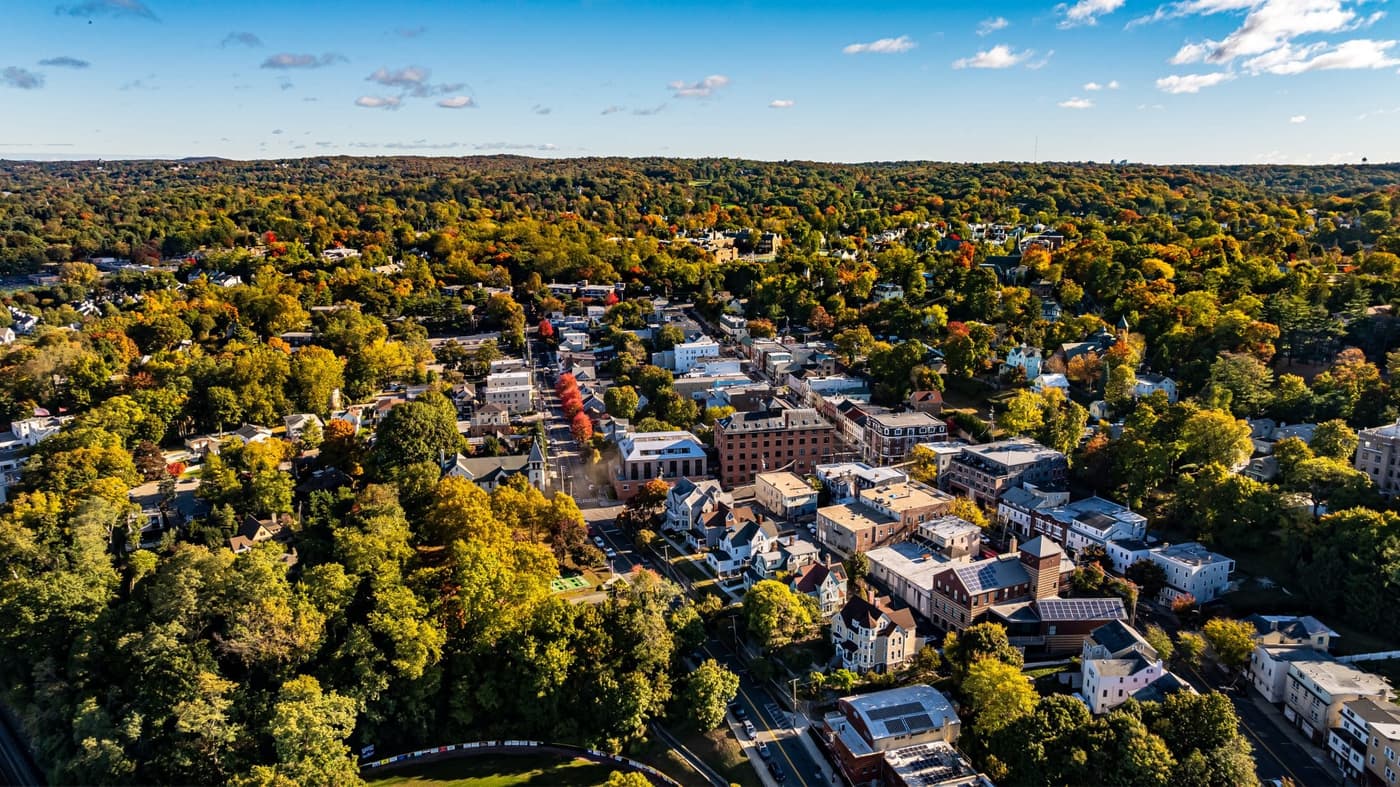
Westchester isn't one place. It ranges from dense, walkable villages to leafy estates to small cities. Here is how the most popular relocation towns stack up.
Scarsdale
The marquee name. Scarsdale's schools are nationally famous, the housing is classic colonial on generous lots, and the Harlem Line commute lands you in Grand Central in roughly half an hour. You pay a premium for all of it. Scarsdale anchors the top of the Westchester price range.
- Best for: Families who'll prioritize the school district above almost everything.
- Commute: Around 30-40 minutes to Grand Central on the Harlem Line.
- Vibe: Polished, academic, established.
Bronxville
A tiny, dense, walkable village built around its train station. Bronxville lets you live car-light in a way most suburbs can't, with an excellent small school district and one of the fastest commutes in the county. The trade-off is space: lots are small and prices are high for the square footage.
- Best for: Families who want suburb schools but city walkability.
- Commute: Around 30 minutes to Grand Central, among the quickest.
- Vibe: Urbane, compact, sidewalk-everywhere.
White Plains
The county seat and its commercial hub. White Plains offers a real downtown with apartments, condos, restaurants, and shopping, alongside single-family neighborhoods. It's a strong landing spot for people who want suburban access without going fully residential, and it's a Metro-North hub with solid service.
- Best for: People who want urban amenities and a downtown in a suburban county.
- Commute: Roughly 35-45 minutes to Grand Central on the Harlem Line.
- Vibe: Busy, mixed-use, convenient.
Rye
A coastal town on the Long Island Sound with a charming walkable downtown, beach club culture, and a strong school district. Rye sits on the New Haven Line and runs toward the pricier end of the county, with waterfront proximity driving part of the premium.
- Best for: Families who want the water, a walkable center, and strong schools.
- Commute: Roughly 45 minutes to Grand Central on the New Haven Line.
- Vibe: Coastal, social, polished.
Yonkers
The value play and the county's largest city. Yonkers offers apartments, condos, and houses at prices well below the marquee villages, with Hudson Line access and proximity to the city, since it borders the Bronx. School zones and neighborhoods vary widely, so research the specific area, but for budget-conscious movers it's the most affordable way into Westchester.
- Best for: Movers who want into Westchester at a lower price point.
- Commute: Around 30-40 minutes to Grand Central on the Hudson Line, plus express bus options.
- Vibe: Urban, diverse, varied block to block.
Pelham
A small, walkable town just over the city line with a quick commute and a tight-knit, family-heavy feel. Pelham is split into the Village of Pelham and Pelham Manor, sits on the New Haven Line, and draws families who want suburb space without straying far from the Bronx border. It's a popular first-move-out-of-the-city choice.
- Best for: Families wanting a close-in, walkable town with a fast train.
- Commute: Around 30 minutes to Grand Central on the New Haven Line.
- Vibe: Friendly, compact, community-driven.
The River Towns (Hastings, Dobbs Ferry, Irvington)
The Hudson Line's river towns, Hastings-on-Hudson, Dobbs Ferry and Irvington, trade big-name school cachet for charm, river views, and walkable village centers with an artsy, relaxed feel. They're popular with creative-class families leaving Brooklyn who want character over polish, and the Hudson Line commute is scenic.
- Best for: Families who want walkable, characterful villages with river views.
- Commute: Roughly 40-50 minutes to Grand Central on the Hudson Line.
- Vibe: Artsy, relaxed, village-scale.
The Metro-North Commute, Honestly
The commute is the number you'll feel every weekday, so plan around it before you fall in love with a house.
Westchester has three Metro-North lines into Grand Central:
- Harlem Line: runs up the middle of the county; serves Scarsdale, White Plains, and points north.
- Hudson Line: runs along the river; serves Yonkers and the river towns.
- New Haven Line: runs through the eastern, coastal towns; serves Rye and continues into Connecticut.
A few things that change the real commute number:
- Express versus local. The same town can have a 35-minute express and a 55-minute local. Check the actual schedule for the trains you'd ride.
- Your walk to the station. A house a 12-minute drive from the platform adds a parking-and-walking tax to every trip. Walkable-to-station towns like Bronxville save you that.
- Grand Central is the destination. If your office is on the West Side or downtown, add the subway or crosstown leg to your door-to-door time.
The upside of Grand Central is that it connects you straight to the subway and the rest of the transit network. For most Westchester commuters, the train portion is the easy, predictable part of the day.
What the Move Itself Costs
A city-to-Westchester move is a short-haul long-distance move: close enough to be quick, far enough that it's priced as a relocation rather than an in-city hourly job. We don't post flat prices because no two moves are alike, but a few things reliably drive the cost.
The factors that move your Westchester quote up or down:
- Home size. A studio is a few hours; a four-bedroom house is a full day or more with a larger crew.
- Access on both ends. A fifth-floor NYC walk-up with no elevator and a tight street is the expensive part. A suburban house with a driveway is the easy end.
- Packing. Whether you pack yourself or add professional packing and unpacking is one of the biggest swing factors.
- Specialty items. A piano, fine art, or antiques need specialized handling and add to the quote.
- Timing. Summer and end-of-month are peak and priced accordingly. See our best time to move guide.
The single biggest cost driver in a city-to-Westchester move is almost always the NYC side: the walk-up, the COI paperwork, the parking, the freight elevator reservation. Westchester unloading into a driveway is the simple half. Our local moving service handles these short-haul suburban moves all the time, and you can read the broader pricing picture in our NYC moving costs guide.
A Realistic Timeline for the Move
A city-to-Westchester move has more moving parts than people expect, mostly because of the NYC side. Here is a sane sequence so nothing gets sprung on you at the last minute.
Eight-plus weeks out: Shortlist your towns, ride the commutes, and start the housing search in earnest. If you're renting in the city, check your lease-end date against your target move window now, not later.
Six weeks out: Book your movers. City-to-suburb moves fill up fast in peak months, and the best crews go first. See how far in advance to book movers. Lock the date before you finalize everything else.
Four weeks out: Sort the NYC building paperwork. Most co-ops and many rentals require a certificate of insurance and a reserved freight elevator window. This is the step that quietly derails moves, so start it early. Decide now whether you're packing yourself or adding professional packing.
Two weeks out: Confirm both buildings, meaning the NYC freight elevator reservation and any access details on the Westchester end. Handle utilities, address changes, and school registration paperwork.
Move week: Pack the essentials box, label rooms for the new house, and confirm parking on the city side. On the day, the crew handles the heavy part; you handle the keys and the coffee.
If your closing or lease dates don't line up cleanly, a common headache when selling one place and buying another, storage bridges the gap so you're not forced into an impossible same-day handoff.
What to Expect After You Land
A few realities that catch first-time suburbanites off guard:
- You'll need a car. Probably two. Westchester is car-country outside the walkable village centers. Budget for it.
- Property taxes are an ongoing line item. Unlike rent, they don't disappear, and they're significant in Westchester. Factor them into the real monthly cost.
- Home maintenance is now your job. Lawn, gutters, snow, the boiler. The super isn't coming.
- The pace is different. Quieter, more space, more driving. Most families love it; some miss the city energy. Visit on a weekday evening before you commit.
If your closing dates don't line up, which is common when you're selling or coordinating a lease end with a purchase, storage bridges the gap so you're not forced into a same-week scramble. And if you're moving with kids, our moving with children guide covers timing it around the school calendar.
Frequently Asked Questions
How much does it cost to move from NYC to Westchester?
It varies by home size, building access, packing needs, and timing, so we quote each move individually rather than post a flat rate. The biggest cost driver is usually the NYC side, meaning walk-ups, parking, and COI logistics, not the Westchester drive itself. For an exact, free number on your specific move, just reach out and we'll price it.
How long is the commute from Westchester to NYC?
Most popular commuter towns run roughly 30 to 45 minutes to Grand Central on Metro-North, with the inner towns like Bronxville and Scarsdale at the faster end. Express versus local service and your walk to the station change the real number, so check the actual schedule for the trains you'd ride before deciding.
Which Westchester town is best for families?
It depends on your priorities. Scarsdale and Bronxville lead on the school-plus-fast-commute combination, Rye adds waterfront and a walkable downtown, White Plains offers urban amenities, and Yonkers is the value entry point. Shortlist by your commute line and budget, then visit on a weekday. Our best NYC suburbs for families guide compares them in detail.
Is Westchester cheaper than living in NYC?
On a cost-per-room basis, often yes. You get far more space for the money. But total cost can rival the city once you add Westchester's significant property taxes, home maintenance, and one or two cars. You're trading high rent for high ownership costs. Run the full picture, and see our cost-of-living comparison for the breakdown.
Do I need a car in Westchester?
In most towns, yes, and frequently two. The walkable village centers like Bronxville let you live car-light, but the county is largely car-dependent for school runs, errands, and getting to the train. Budget for the cars, insurance, and gas as part of your real monthly cost.
When is the best time to move to Westchester?
Summer is the most popular window for families timing the school calendar, which also makes it the busiest and priciest moving season. A spring or fall move can mean better mover availability and lower costs if your schedule allows it. Book early either way, since city-to-suburb moves fill up fast in peak months.
Bottom Line
Moving from NYC to Westchester is the classic upgrade trade: you swap a cramped rental and a broken elevator for space, a sought-after school district, and a Metro-North ride that keeps your Midtown job realistic, all without leaving New York State. The costs are real, the property taxes are ongoing, and you'll need a car or two. But for most families chasing room to breathe and a school they believe in, the math finally works. Shortlist your towns by commute line, ride the train before you sign, and plan the move around the school calendar.
Ready to move? Get your free quote from Avant-Garde Moving and let our team handle the city-to-Westchester relocation: the tricky NYC walk-up, the COI paperwork, and the easy suburban unload, all in one move.