
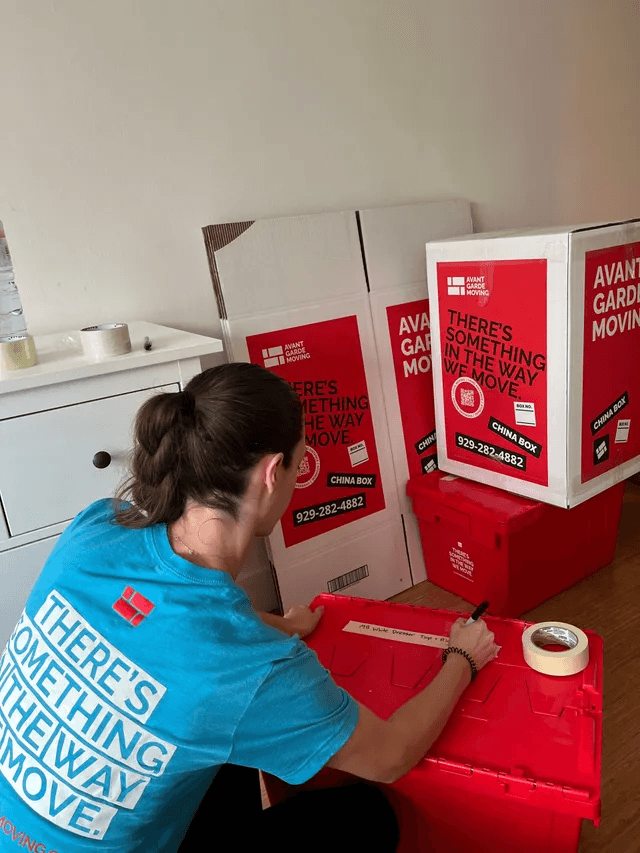

Most people decide whether to hire professional packers by asking one question: can I afford it? The better questions are how many hours it will really take you, what breaks if you get it wrong, and who pays when it does.
That last one surprises people. When you pack a box yourself and something inside it breaks, your claim against the mover can get a lot weaker. Federal moving rules say so in writing.
The Short Answer
Professional packers bring every box and roll of paper, wrap and pack your entire home, and label it for the move. A studio usually takes about 4 hours. A two-bedroom usually takes a day. The cost depends on hours, crew size, how fragile your things are, the season, and whether you book a full pack or just the kitchen and breakables.
Packing yourself saves the labor cost, but it takes weeks of evenings, and if something breaks inside a box you packed, the mover can argue your packing caused it. For most NYC moves, the best value is a partial pack: you do clothes, books, and linens, and the pros do the kitchen and anything fragile.
What Professional Packers Actually Do
A packing crew is not just people putting things in boxes. On a full pack, they handle:
- Materials. Boxes in several sizes, packing paper, bubble wrap, tape, dish packs, and wardrobe boxes. Our packing service includes all materials.
- Fragile wrapping. Every plate, glass, and frame wrapped on its own, with plates standing on edge in double-wall dish boxes. Our guide to how to pack dishes for moving shows the exact method.
- The closet. Hanging clothes go straight into wardrobe boxes, still on the hanger.
- Electronics. TVs, monitors, and computers wrapped and boxed, with cables bagged and labeled.
- Furniture protection. Pads, covers, shrink wrap, and mattress covers before anything is carried.
- Labeling. Every box marked with its room and contents, so it lands in the right place at the other end.
Unpacking is a separate add-on. If you book it, the crew unpacks at the new place, sets things where you want them, and breaks down the empty boxes.
What packers will not box: anything flammable or hazardous. For interstate moves, federal rules forbid shipping hazardous materials in household goods boxes without telling your mover. Our list of items you should never pack in standard moving boxes covers the rest.
How Long Professional Packing Takes
These are the times we publish for our own crews:
| Home | Full Pack | Fragile-Only Pack |
|---|---|---|
| Studio | About 4 hours (2-4 hours with a small crew) | 1-2 hours |
| 2-bedroom | About a day | Quoted after a walk-through |
| 2-3 bedroom, full kitchen | 1-2 days | Quoted after a walk-through |
The studio numbers come from our guide to packing services for a studio apartment. A stuffed closet or a kitchen with three sets of dishes takes longer. A sparse apartment goes faster.
Now compare that with doing it yourself. For a one- or two-bedroom, our room-by-room packing guide tells people to start three to four weeks out and pack a little every day. Studios can compress that to one or two weeks. Pros are not working harder. They pack every day, with the materials on hand, and never stop to decide whether to keep the bread maker.
What Drives the Cost of Professional Packers
Packing is labor plus materials, and labor is priced by time. So the cost comes down to what makes the job longer or bigger:
- How much you own. Two apartments with the same floor plan can be a half-day apart. Books, a full kitchen, and a deep closet add the most time.
- How fragile it is. A kitchen full of glassware takes far longer per box than a closet of sweaters.
- Full, partial, or fragile-only. The less the crew packs, the fewer hours you pay for.
- Crew size. A bigger crew finishes faster. Hours times people is what you are buying.
- The season and the day. NYC moving rates swing by season, and packing crews are booked by the same calendar. See our best time to move in NYC guide.
- Special items. Art, mirrors, marble tops, and antiques may need custom crating, which is quoted on its own.
- Your prep. Decluttering before the crew arrives cuts the hours. You are paying to pack less.
A Worked Estimate for a Studio
We do not publish a separate packing rate, so treat this as a rough check, not a price. It takes the published studio time (up to about 4 hours) and multiplies it by the published hourly bands from our NYC moving cost guide. Those hourly bands are what a moving crew and truck cost, so this assumes packing is billed at the same crew rate. Ask whether yours is.
| Season | Published Hourly Band | Estimate: 4 Hours x Band |
|---|---|---|
| Winter (Dec-Feb) | $100-$140 | $400-$560 |
| Spring (Mar-May) | $130-$170 | $520-$680 |
| Summer (Jun-Aug) | $150-$200 | $600-$800 |
| Fall (Sep-Nov) | $120-$160 | $480-$640 |
A fragile-only studio pack at 1 to 2 hours, on the same assumption, works out to 1 x $120 = $120 at the low end and 2 x $160 = $320 at the high end in the fall.
For a two-bedroom or larger, we do not publish an hour count precise enough to do this math. A "day" depends on how much you own. The honest answer is the hours on your written quote times your crew rate.
The Packing You Pay for by Accident
A crew that finds sealed, labeled boxes starts loading right away. A crew that finds open drawers starts packing, at the hourly rate, on the busiest day of your move. If you will not finish, book the packing up front.
Who Pays When Something Breaks
This is the part most packing comparisons skip, and it can matter more than the price.
Boxes You Pack Yourself
The federal booklet every interstate mover must give you, Your Rights and Responsibilities When You Move, lists actions that "may limit or reduce your mover's liability." The first example on the list is "improper packing of containers you pack yourself."
In practice: a box you packed arrives with no dents, no crushed corners, no tears, and a broken platter inside. The mover can argue the box was handled fine and the packing failed. When the mover's crew packed that box, that argument is much harder to make.
The industry term for these is PBO, "packed by owner". Before you decide, ask your mover how it handles claims on PBO boxes, and get the answer in writing.
How Much the Mover Owes, Even When It Is Liable
Liability also has limits that depend on the coverage you choose.
- Interstate moves. Under the same federal booklet, Full Value Protection is the default, and the mover must repair the item, replace it, or pay you for either. If you waive it for Released Value, the mover owes no more than 60 cents per pound, per article. The booklet's own example: a 10-pound stereo component worth $1,000 gets you no more than $6.00. Items worth more than $100 per pound, like china, silverware, and antiques, must be listed on your shipping papers or the mover can limit what it pays.
- Local moves in New York. For moves charged by the hour inside the state, New York's rule (17 NYCRR 829.2) lets you release the shipment at 30 cents per pound per article. If you do not, the mover's maximum liability is the lump-sum value you declare or $2,500, whichever is greater.
Put those together and the risk is clear. A cheap coverage level plus boxes you packed yourself is the weakest position you can be in if your grandmother's china breaks. Our moving insurance guide explains each option in more detail.
Professional Packers vs. DIY: Side by Side
| Professional Packers | Packing Yourself | |
|---|---|---|
| Time | Studio in about 4 hours, 2-bedroom in about a day | Several weeks of evenings for a 1- or 2-bedroom |
| Breakage risk | Lower: proper dish packs, double wrapping, boxes packed to carry | Higher, especially in the kitchen and on walk-up stairs |
| Liability | Easier claim when the mover's crew packed the box | Federal rules list "improper packing of containers you pack yourself" as a way to reduce the mover's liability |
| Materials | Included in our packing service | You buy or rent them, and run out at midnight |
| What drives the cost | Hours, crew size, fragile items, season, unpacking add-on | Materials, your time, and anything that breaks |
| Best for | Fragile kitchens, art, tight timelines, long-distance moves | Small, sturdy households with time to spare |
The Partial Packing Option
You do not have to choose all or nothing. Partial packing is a popular middle ground, and for good reason.
How it splits:
- You pack: clothes, books, linens, toys, and anything that does not break.
- The crew packs: the kitchen, glassware, art, mirrors, lamps, and electronics.
Fragile-only is the narrowest version. The crew packs only the high-risk items, which for a studio often means just the kitchen. At 1 to 2 hours, it is the smallest professional booking you can make, and it puts the boxes most likely to cause a claim in the mover's hands.
Two add-ons fit a partial pack well:
- Plastic bin rental for the half you pack yourself. The bins are delivered before the move and picked up after, so there is no cardboard to buy, build, or break down.
- Custom crating for the one or two pieces a box cannot protect, like a large painting or a marble tabletop.
If you want the crew to handle everything, including unpacking and setting up the new place, that is closer to white-glove moving.
When Packing It Yourself Makes Sense
DIY packing is a fair choice when most of these are true:
- You own little that can break. Clothes, books, and a small kitchen are easy to pack well.
- You have time. At least two weeks for a studio, three to four for a one- or two-bedroom.
- It is a local move. Fewer handoffs mean fewer chances for a weak box to fail.
- You want to sort as you go. Packing yourself is a forced decluttering session.
- Nothing is irreplaceable. If losing a box would be annoying but not painful, the liability gap matters less.
When Professional Packers Are Worth It
Hire the pros, or at least book a partial pack, when any of these are true:
- Your kitchen is full. It is the most fragile room and the slowest to pack.
- You have art, antiques, or heirlooms. These are where packing and liability matter most.
- Your timeline is short. A crew does in a day what takes you weeks.
- You are moving long-distance. Boxes on long-distance moves get handled more and travel longer.
How to Get an Accurate Packing Quote
A good quote needs a real look at what you own, so show the crew every cabinet, closet, and fragile piece, in person or on video. Then ask four questions:
- Are materials included, or billed on top?
- Is packing billed at the same hourly rate as the move?
- How do you handle claims on boxes I pack myself?
- Which coverage level does the quote assume?
When you are ready to book, our packing and unpacking service covers full, partial, and fragile-only packing across New York City.
Frequently Asked Questions
How much do professional packers cost in NYC?
It depends on hours, crew size, and season. As a rough estimate, a studio full pack of about 4 hours at our published NYC crew rates of $100 to $200 an hour works out to $400 to $800 in labor, assuming packing is billed at the moving crew rate. Larger homes are priced from a walk-through, so get a written quote.
How long do professional packers take?
A studio takes about 4 hours, and a fragile-only studio pack takes 1 to 2 hours. A two-bedroom usually takes a day, and a two- to three-bedroom with a full kitchen can take 1 to 2 days.
Are movers liable for boxes I pack myself?
The mover is still responsible for your shipment, but its liability can be reduced. The federal "Your Rights and Responsibilities When You Move" booklet lists improper packing of containers you pack yourself as an action that may limit or reduce the mover's liability. If a box you packed arrives intact with broken items inside, expect a harder claim.
What is partial packing?
You pack the sturdy, easy items like clothes, books, and linens, and the professional packers handle the kitchen, glassware, art, and electronics. Fragile-only packing is the narrowest version, where the crew packs only the breakables.
Do professional packers bring their own supplies?
Yes. Our packing service includes all materials: boxes, paper, bubble wrap, tape, dish packs, wardrobe boxes, and furniture covers.
What will professional packers not pack?
Anything flammable or hazardous, open liquids, and perishable food. Federal rules for interstate moves forbid shipping hazardous materials in your household goods without telling the mover. Keep medications, documents, and valuables like jewelry with you.
This guide is general information, not legal advice. Coverage terms vary by mover and by move, so read your bill of lading and the linked rules before you sign.
The Bottom Line
Professional packers trade money for time and protection. A studio takes an afternoon and a two-bedroom takes a day, and the cost is mostly hours times crew rate, driven by how much you own and how fragile it is.
Packing yourself saves the labor but costs you weeks, and it weakens your position if something breaks inside a box you sealed. If the full price is more than you want to spend, do not go all the way to DIY. Hand the kitchen and the fragile items to the pros, pack the rest yourself, and you get most of the protection for a fraction of the hours.
Want a real number for your packing? Avant-Garde Moving gives free, written quotes for full, partial, and fragile-only packing across New York City, with materials and coverage spelled out. Request your free quote and tell us what is in your kitchen.

